
Cairo, August 21, 2025
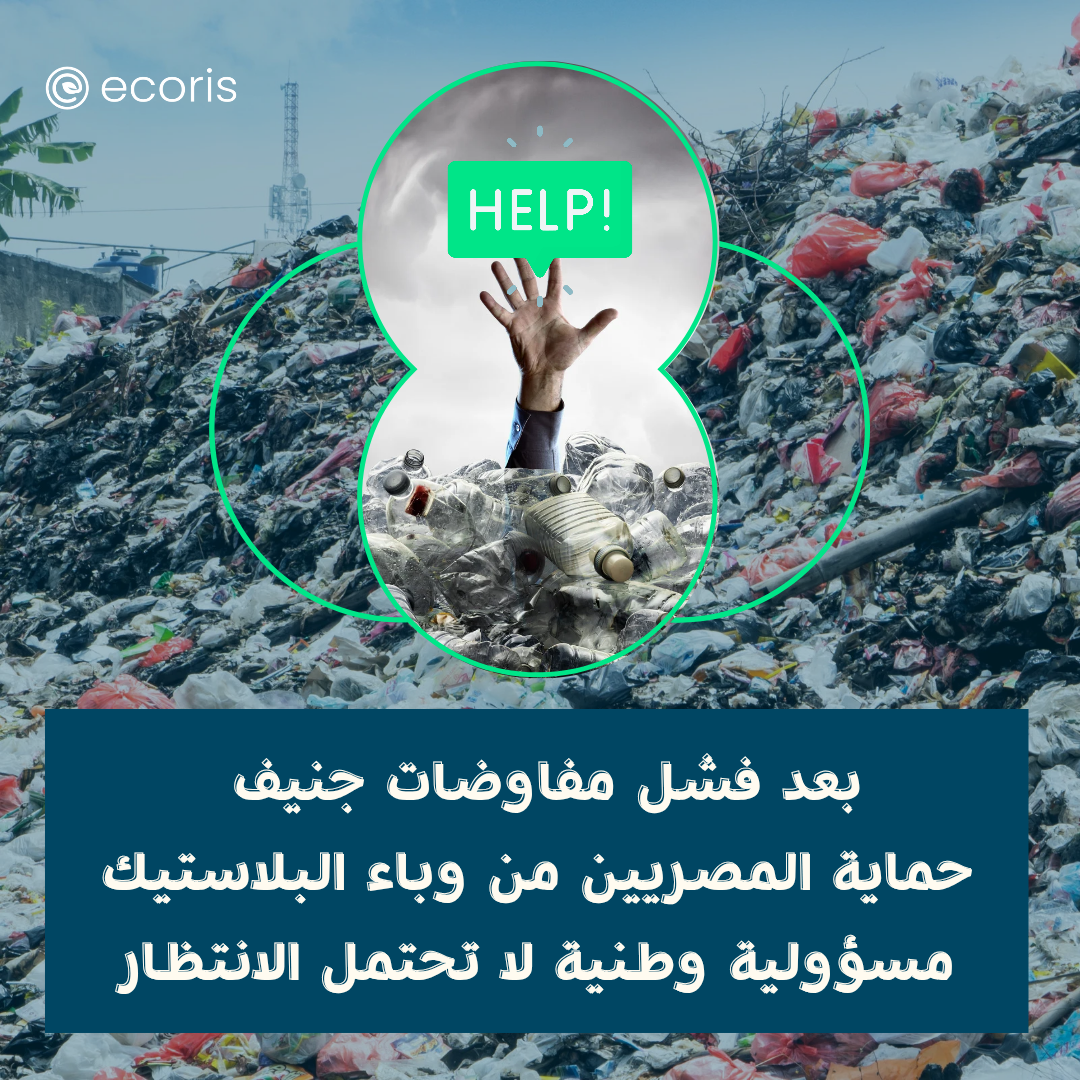
The sixth round of negotiations for the Global Plastics Treaty in Geneva has concluded without a binding agreement, leaving the world facing a dangerous regulatory vacuum. This setback, following the earlier failure in Busan, confirms a clear reality: relying on the international track alone is no longer an option.
The responsibility now falls directly and urgently upon national governments to protect their citizens’ health and environment from the escalating threat of plastic.
Why Has Local Action Become an Urgent Imperative?
* The Danger Lies in the Entire Plastics Lifecycle: The crisis does not begin with waste. It starts with the extraction of fossil fuels for production, continues with the addition of thousands of chemicals (some of which are proven to be toxic and endocrine-disrupting), and ends with its breakdown into “micro and nano-plastics” that contaminate our air, water, and food.
These particles have been detected in human blood, lungs, and even the placenta, proving their ability to penetrate sensitive body tissues.
* The Gap is Widening with Alarming Projections: The Organisation for Economic Co-operation and Development (OECD) estimates that global plastic production could surge by 70% by 2040 under a business-as-usual scenario.
Relying on recycling alone has proven ineffective, with the global rate not exceeding 9%, which means solutions must start upstream by reducing production.
* The International Track is Stalled: The core conflict in Geneva was between a coalition of over 100 countries demanding a cap on production and a few oil-producing nations insisting on limiting solutions to waste management.
This deep division makes waiting for an international consensus a luxury we cannot afford.
What is Immediately Required from Egyptian Policymakers?
Protecting Egypt’s public health and environment demands a decisive, science-based national policy package, without waiting for international decisions that may never come:
1. Mandate Chemical Transparency: Require producers to fully disclose all chemical additives in plastic products, especially packaging, and establish a list of high-risk substances to be banned.
2. Set National Production Reduction Targets: Establish binding quantitative targets to reduce the production and consumption of virgin and single-use plastics, while incentivizing a shift towards business models based on reuse and refill systems.
3. Launch a National Health and Environmental Monitoring Program: Create a program to monitor microplastic pollution in the air, Nile water, and local food products, publishing the results transparently to guide health and industrial policies.
4. Implement the “Polluter Pays” Principle: Enforce Extended Producer Responsibility (EPR) tools to ensure that companies, not just consumers or the state, bear the full lifecycle cost of managing their products’ waste.
The failure of international diplomacy is no excuse for domestic inaction. Protecting Egyptians from the dangers of plastic begins with sovereign decisions today to secure a healthier and safer future.
For Media Inquiries: