
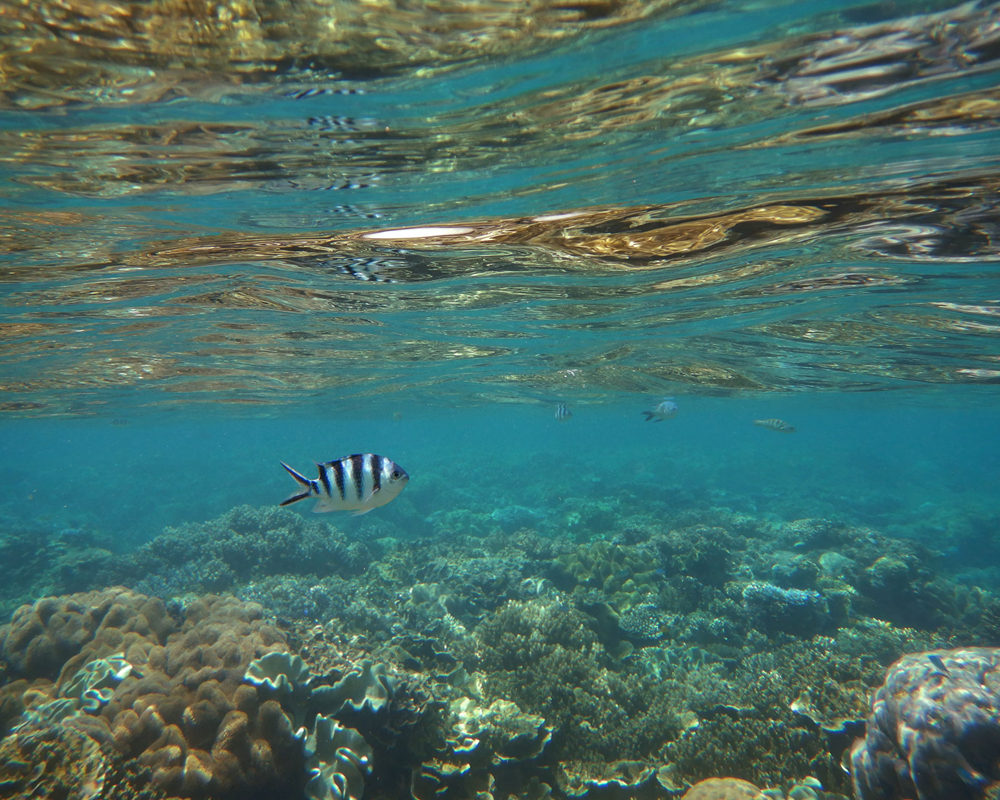
From 2040 onwards the average year for marine ecosystems is likely to be more extreme than the worst years experienced up until 2015, researchers say
Australian researchers modelled ocean conditions under four scenarios, including current, high- and low-emissions futures. They found that in 15 years, marine ecosystems would be facing extreme heat, oxygen loss and acidity conditions.
“The average year from 2040 onwards will be more extreme than the most extreme year that we’ve experienced up until 2015,” said Prof David Schoeman of the University of the Sunshine Coast, co-author of the research published in Earth’s Future.
Alice Pidd, the study’s lead author who is also from the University of the Sunshine Coast, said marine species were already shifting towards the poles, seeking out cooler waters at an average of 59km per decade at current rates of warming. Some species were moving faster, such as kingfish in eastern Australia, which were shifting up to 102km every 10 years.
“This gradual ratcheting up is punctuated by extreme events such as marine heatwaves that are becoming increasingly more frequent, intense and prolonged,” she said. “As our oceans acidify [and] lose oxygen, the life they support is under increasing pressure to move, adapt or die. We’re already seeing this in action.”
The projections showed marine protected areas were just as exposed to these risks as unprotected ocean. The authors recommended the expansion of protected zones to include places designated as climate refuges where biodiversity had the best chance of surviving.
Potential refuges – areas expected to see the least amount of change – were mostly located along southern and south-western coastlines under emissions scenarios that met or exceeded the Paris climate agreement. These were fewer, and vanished more quickly under higher-emissions scenarios.
The team called for urgent, aggressive action to reduce carbon emissions in order to delay or limit the projected climate impacts.
“We’re entering uncharted territory and marine biodiversity will be under increased pressure to adapt,” Pidd said. “The past is no longer a good guide to the future.”
Prof Jodie Rummer, a marine biologist at James Cook University who was not involved with the study, said ocean warming, oxygen loss and acidification were a “deadly trio” for marine life and changing conditions were already making survival more difficult.
“We’ve seen differences in behaviour due to temperature changes that the Great Barrier Reef, coral reefs and tropical ecosystems are facing already. Some fishes are actively seeking cooler habitats,” she said. Some small sharks, thought to be tolerant to challenging conditions, were also reaching their limits.
“The rules that we’ve been relying on for ocean protection and conservation, they’re going to have to evolve,” she said.