
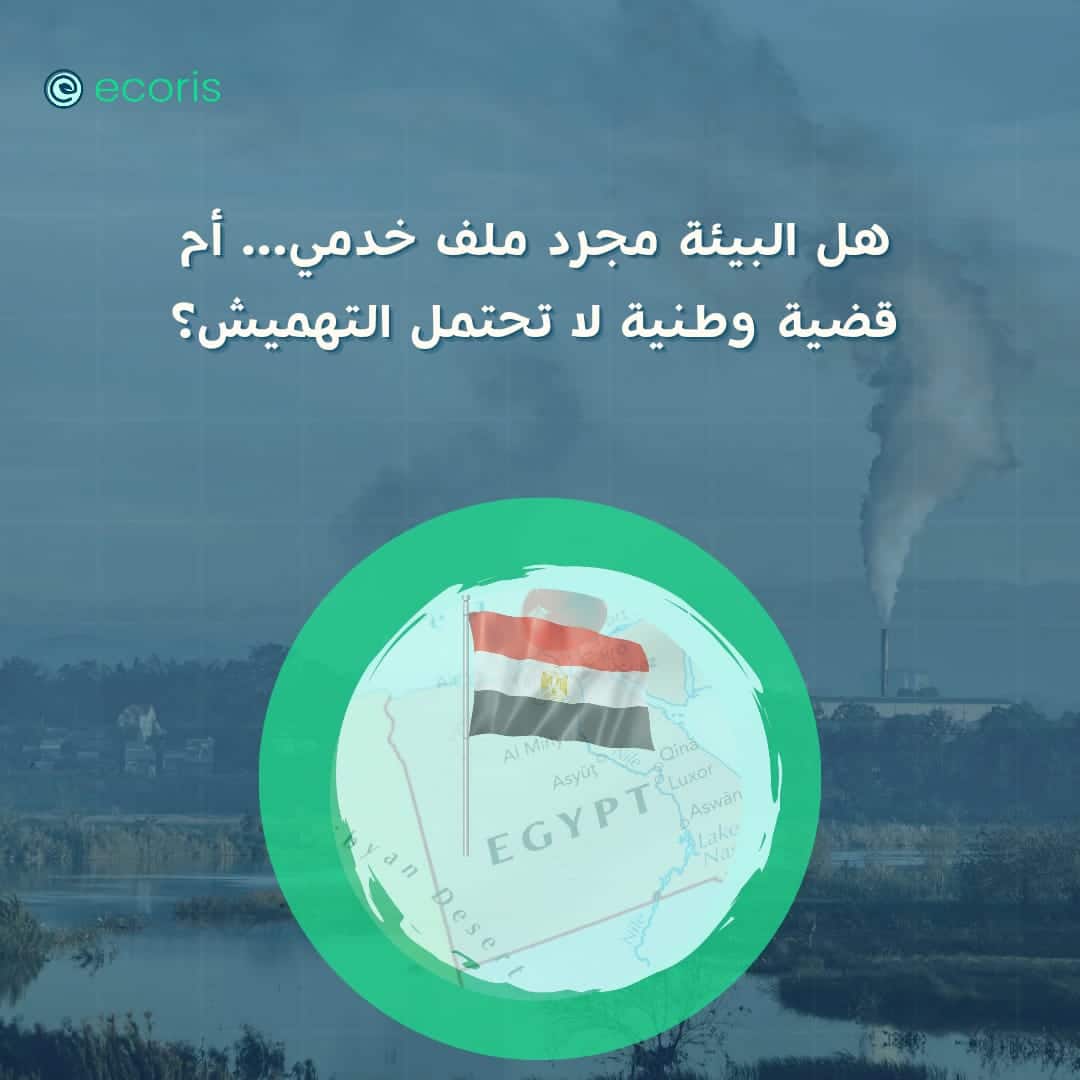
ECORIS for Sustainable Development is closely following the recent ministerial reshuffle, particularly the decision to merge the Environment portfolio with Local Development—a move that opens a broad and necessary discussion on the future of environmental governance in Egypt.
While ECORIS affirms its full respect for sovereign decisions and for those appointed to public office, it believes that this merger raises fundamental questions regarding the status of the environment within the decision-making system, and its ability to maintain scientific and regulatory independence in the coming phase.
The environment is not a limited service-oriented or administrative file; it is a strategic national issue that directly affects national security, public health, the sustainable economy, tourism, and Egypt’s international environmental commitments. Moreover, it is a complex scientific and technical field that requires specialized management.
ECORIS stresses that addressing issues such as biodiversity conservation, the management of natural reserves, the protection of coral reefs and mangroves, combating air and water pollution, and safeguarding endangered marine species requires an institutional entity with sufficient independence and technical and regulatory authority—one capable of coordinating among various stakeholders without subordinating environmental considerations to the logic of daily service administration.
ECORIS believes that integrating the environmental file within the framework of local development may—despite good intentions—lead to a reduction of the environment’s scientific and oversight role, and weaken the ability to address complex environmental challenges. This could negatively affect Egypt’s regional and international environmental commitments.
Drawing on diverse international experiences, ECORIS affirms that countries that place sustainability at the core of their public policies elevate the role of ministries of environment and grant them clear institutional independence, recognizing the environment as a fundamental pillar of long-term national planning, rather than a subordinate administrative file.
Accordingly, ECORIS calls for a review of the mechanisms governing environmental management within the new governmental structure, ensuring the independence of environmental decision-making and protecting it from marginalization. ECORIS also calls for a serious professional and societal dialogue on the future of the environment in Egypt—one that achieves a balance between development needs, the protection of natural resources, and the rights of future generations.
ECORIS for Sustainable Development
Cairo